
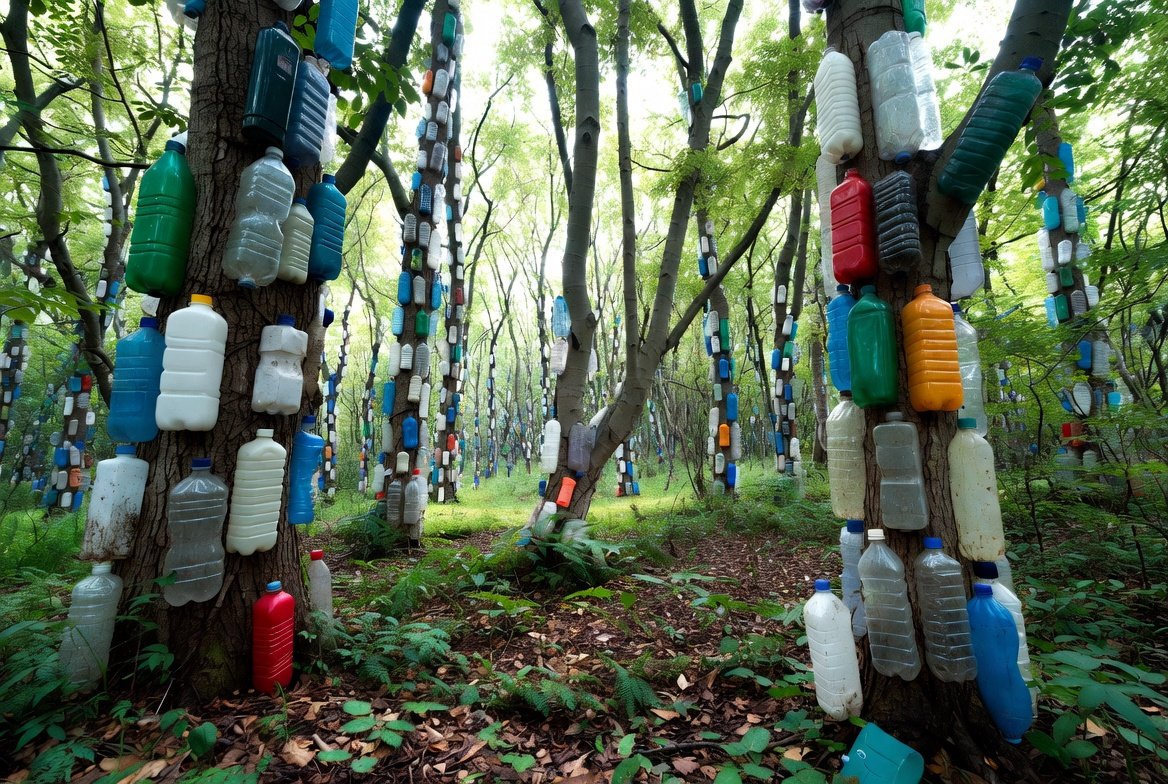
The Real Story of Disposable Plastics: Convenience, Consequence, and the Surprising Case for Carbon Sinks
By Carl Austins | ThinkForgeHub
The Everyday Convenience of Disposable Plastics—And Why We Rely on Them
We can debate plastic forever, but the truth is simple: disposable plastics became dominant because they work.
1. They improve sanitation and safety
In medical settings, food handling, and global supply chains, single-use plastics reduce contamination and spoilage. That’s not theoretical—that’s millions of infections prevented and countless products kept viable.
2. They reduce shipping emissions
Plastics are extremely lightweight. Compared with glass or metal, they cut fuel use and lower transport-related CO₂.
3. They keep costs down
For families living paycheck to paycheck, plastic packaging isn’t wasteful—it’s a lifeline that keeps essentials affordable.
These practical benefits are why disposable plastics exploded globally and why eliminating them entirely isn’t as straightforward as many people think.
The Side We Try Not to Look At: Environmental and Health Costs
But convenience doesn’t erase consequences, and plastics come with major ones—some visible, some hidden.
1. Disposable plastics start as fossil fuels
Around 99% of plastics come from petrochemicals, locking us deeper into oil and gas dependency.
2. Recycling rates are shockingly low
Most single-use plastics are never recycled. Many studies show recycling rates under 10% for the types of plastic used in food packaging, wrappers, and to-go items.
3. They become microplastics that enter our bodies
Microplastics are now found in:
- drinking water
- soil
- sea salt
- marine life
- human blood
- human lungs
- placental tissue
We don’t yet know the full health effects—but early findings raise serious concerns about inflammation, endocrine disruption, and long-term toxicity.
4. “Eco alternatives” aren’t always better
This is the nuance most people miss:
- Paper bags can require 4x more water to produce.
- Cotton totes need potentially hundreds of uses to offset their footprint.
- Glass jars require much higher energy to produce and ship.
The point isn’t that plastics are good—it’s that the alternatives come with trade-offs too.
The Curveball: Could Plastics Act as Carbon Sinks?
This is one of the most fascinating and misunderstood emerging ideas in sustainability.
Recent research suggests that biogenic plastics—plastics made from plant-derived carbon—could theoretically store carbon long-term if manufactured and managed correctly.
A 2025 Nature Communications study projected that plastics could store up to 270 million metric tons of CO₂-equivalent by 2050, but only under very strict conditions:
- bio-based feedstocks
- renewable energy manufacturing
- 90% recycling rates
- long product lifetimes
- minimal leakage into the environment
Right now?
We hit almost none of these benchmarks.
So is the carbon-sink idea real?
Yes—but only for the plastics we aren’t using today.
And only if global manufacturing, waste management, and bio-feedstock infrastructure transform dramatically.
The potential is exciting. The reality is sobering.
The Honest Balance: Pros, Cons, and What Actually Makes Sense
Where disposable plastics make sense
- Medical and sterile environments
- Preventing food waste in long supply chains
- Emergency situations and disaster relief
- Situations where reusable options are inaccessible or impractical
Where they do more harm than good
- Ultra-short-life convenience items
- Unnecessary packaging
- Products that have effective reusable alternatives
- Situations where disposal systems are overwhelmed or nonexistent
Carl Austins’ Take: Use Plastics Strategically, Not Carelessly
I don’t believe in guilt-driven environmentalism. I believe in honest environmentalism—where we consider full system impacts, unintended consequences, and the realities people face.
My view:
- Disposable plastics are not pure villains.
- But they are massively overused.
- And the carbon-sink argument should not be used as a free pass.
If we’re thoughtful—if we use disposables in the situations where they perform best, and reduce them elsewhere—we can have a healthier balance.
A smarter future for plastics looks like this:
- Less unnecessary use
- More reusable systems
- Rapid investment in bioplastic research
- Renewable-powered manufacturing
- True recycling infrastructure
- Policy that makes waste expensive and circularity profitable
If we get those things right, plastics could shift from a planetary burden to a managed, even useful, material.
But we’re not there yet.
Final Thoughts: Disposable Doesn’t Mean “Gone”
Plastics stay with us—literally and figuratively. We find them in oceans, soil, bloodstreams, and ecosystems. We also find them protecting food, saving lives, and making goods more accessible.
The question isn’t whether plastics are good or bad.
The question is whether we’re using them responsibly—and whether we’re building the systems to handle them properly.
The carbon-sink idea shows promise, but promise isn’t practice. Until then, our best path forward is moderation, mindful use, better design, and policies that push industry toward circularity.
We can’t pretend disposables disappear.
But we can make sure their impact does.
— Carl Austins
Leave a Reply