
-Carl Austins
What if the most powerful element in art, conversation, and life itself is… nothing?
Not emptiness as absence, but emptiness as possibility. In Japanese aesthetics, this “nothing” has a name: ma (間). The kanji is poetic in its simplicity—a sun (日) glimpsed through a gate (門)—light made meaningful precisely because it is framed by darkness.
Most articles about Japan fixate on cherry blossoms, samurai, or sushi. Few explore ma, yet it is the invisible thread running through traditional music, architecture, gardens, tea ceremony, Noh theater, sumi-e painting, and even modern minimalist design. Master the concept of ma, and you begin to see why Japanese spaces feel expansive, why silences feel pregnant rather than awkward, and why restraint so often communicates more than excess.
This is the hidden key to understanding Japanese culture at its deepest level—and one that Western minds, trained to abhor a vacuum, urgently need today.
What Is Ma, Exactly? (The Definition Most People Get Wrong)
The most common translation is “negative space” or “gap.” That’s accurate but shallow.
A better translation is “the space between.” Between sounds. Between movements. Between words. Between people. Between now and what comes next.
Architect Arata Isozaki, who collaborated with Tadao Ando and helped introduce Japanese minimalism to the West, called ma “the natural pause or interval between two or more phenomena occurring jointly or successively.” Phenomenologist Kimura Bin preferred to describe it as “experiential time-space-time”—a single indivisible field in which subject and object arise together.
In short: ma is not the absence of something. It is the presence of relationship.
Where You’ve Felt Ma Without Realizing It
- The breath-held silence after the final note of a shakuhachi solo
- The deliberate pause in a tea ceremony before the bowl is turned
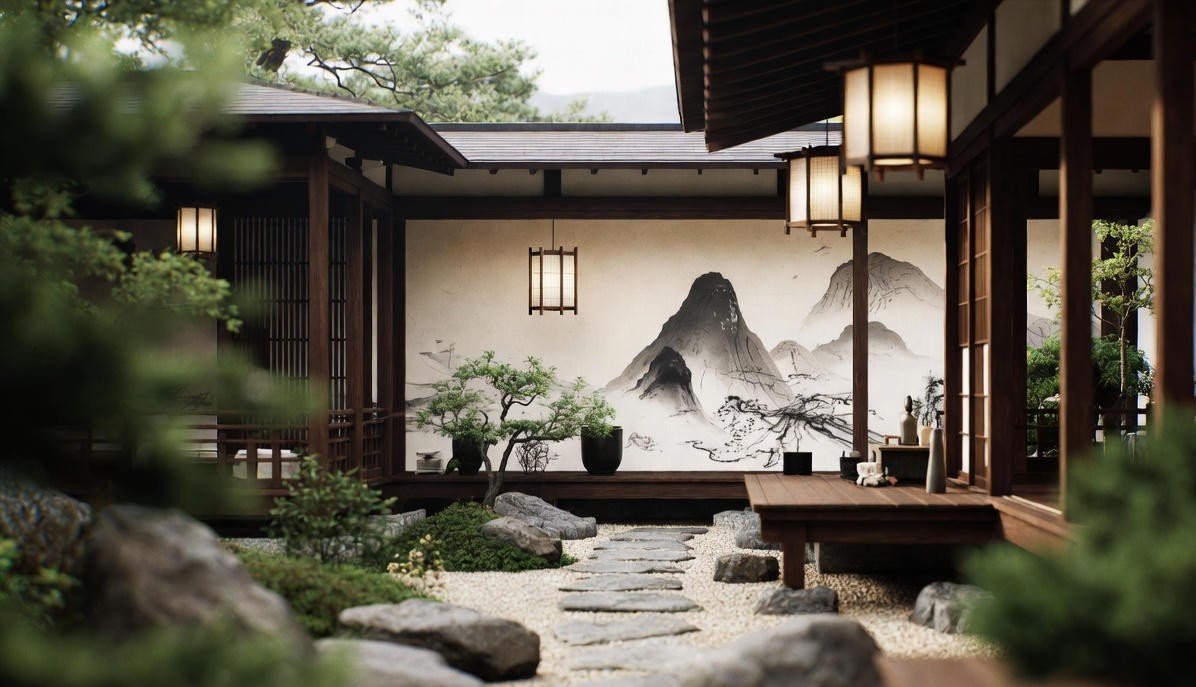
- The vast white space in a sumi-e painting that makes the single brushstroke of a mountain feel infinite
- Ozu’s static camera lingering on an empty corridor long after the characters have left
- The moment in conversation when a Japanese person waits—really waits—before replying
These are not accidents or flaws. They are the composition.
The Perspective Almost Everyone Misses: Ma as a Moral and Psychological Technology
Popular treatments frame ma as an aesthetic preference. That’s the tourist level.
The deeper, rarely discussed level is ethical.
In a culture built on interdependence (wa), ma is the lubricant that prevents friction. The tiny silence before answering is not evasion; it is radical respect—it grants the speaker’s words their full weight. Anthropologist Takie Sugiyama Lebra called this “anticipatory empathy”: you read the unspoken so sensitively that interruption becomes impossible.
During the 2011 Great East Japan Earthquake, foreign media marveled at the orderly queues and absence of looting. They called it “stoicism.” Japanese observers more often reached for gaman (perseverance), but the deeper mechanism was ma: the collective willingness to let time do emotional labor, to allow space for shared grief instead of individual panic.
The Contrarian Critique That Deserves a Hearing
Not everyone celebrates ma.
Feminist scholar Chizuko Ueno and others have argued that the burden of maintaining harmonious intervals has historically fallen on women—who must suppress opinions, soften language, absorb tension. The pressure to “read the air” (kūki o yomu) can become emotional labor taken to pathological extremes. The slang insult “KY” (kūki yomenai—cannot read the air) reveals how quickly sensitivity can flip into social control.
Young Japanese creators—especially in manga, fashion, and music—are increasingly rejecting ma in favor of maximalism, color overload, and direct speech. Harajuku street style, Vocaloid concerts, and the chaotic energy of TikTok Japan can be read as a generational revolt against enforced silence.
These critiques are valid. Like any powerful cultural tool, ma can be weaponized. The salaryman who lets the meeting room hang in terrified silence before speaking is not practicing Zen—he is asserting hierarchy.
Yet even the critics rarely abandon ma entirely; they renegotiate its boundaries. That tells us something important: the concept is too fundamental to discard, only to reform.
How to Practice Ma in a World That Punishes Pause (Practical Applications for 2025)
- In conversation: Wait four full seconds before replying. Watch what emerges.
- In writing: Leave more white space. Let paragraphs breathe.
- In design: Remove one element from every slide, email, or room. See what happens.
- In music/playlists: Insert ten seconds of silence between tracks. Notice the difference.
- In life: Schedule “nothing” blocks in your calendar and defend them ruthlessly.
The apps that promise productivity through constant input are selling the opposite of ma is the original productivity hack—it’s just free, and it scales infinitely.
Final Thought: The Gift Japan Is Still Trying to Give Us
We are drowning in content, notification, opinion, stuff. Japan’s quiet insistence on interval—on the power of what is not said, not built, not filled—feels almost subversive now.
But subversion is exactly what we need.
The sun through the gate. The note that ends, and the silence that follows. The moment you stop scrolling and simply notice the space between one breath and the next.
That space is ma. And it has been waiting for us, patiently, for fifteen hundred years.
-Carl Austins